THE AMBER VALE
The Vale Was Never Empty
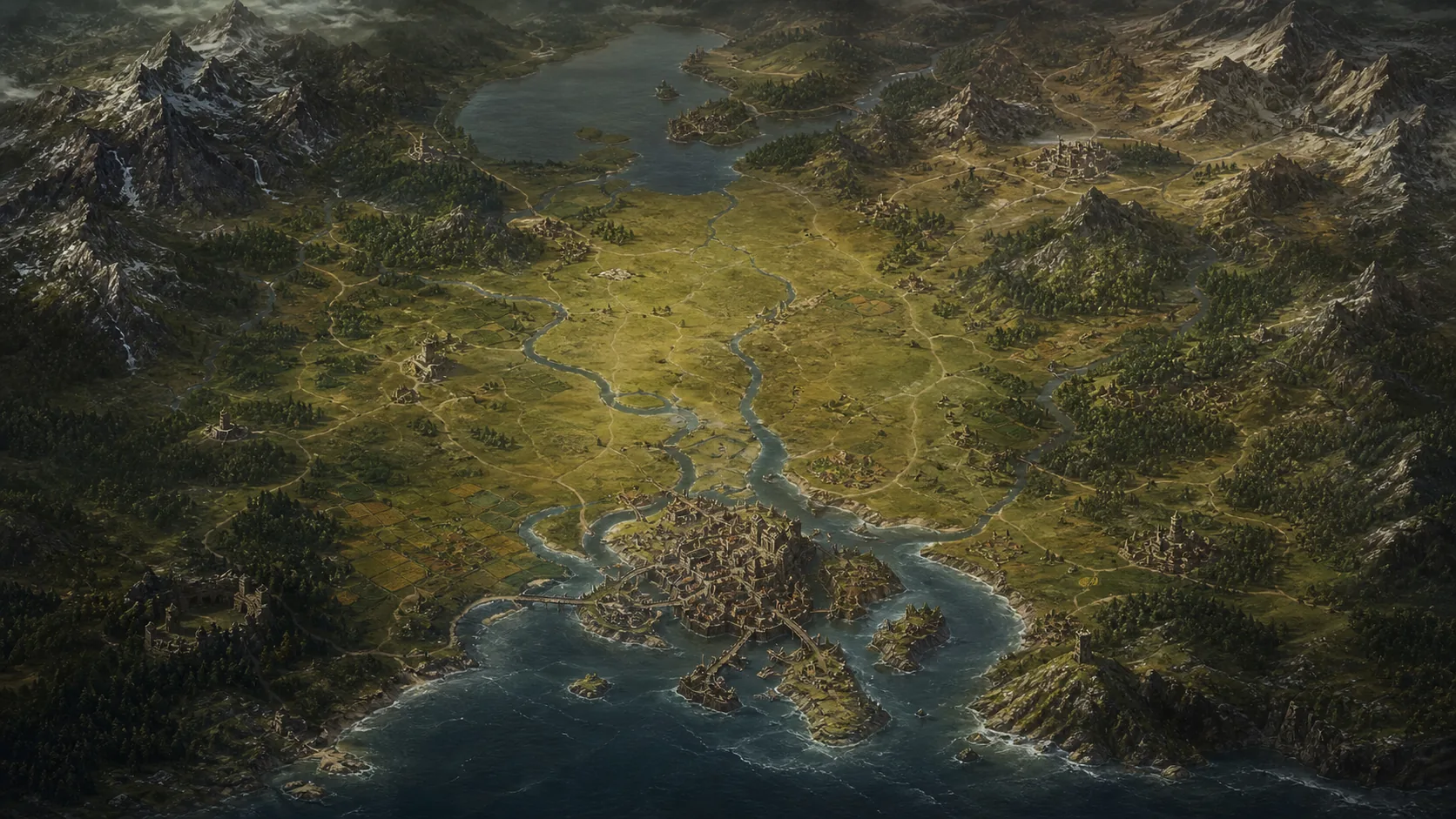
Long before the first civilizations of the new age, people crossed, cultivated and argued over the Amber Vale. Its rivers and old routes made it useful. Its usefulness made it remembered. What survives is not one clean history, but a collection of names, boundary stones and stories that rarely agree.
The old records agree on the crossings more often than they agree on who owned them.
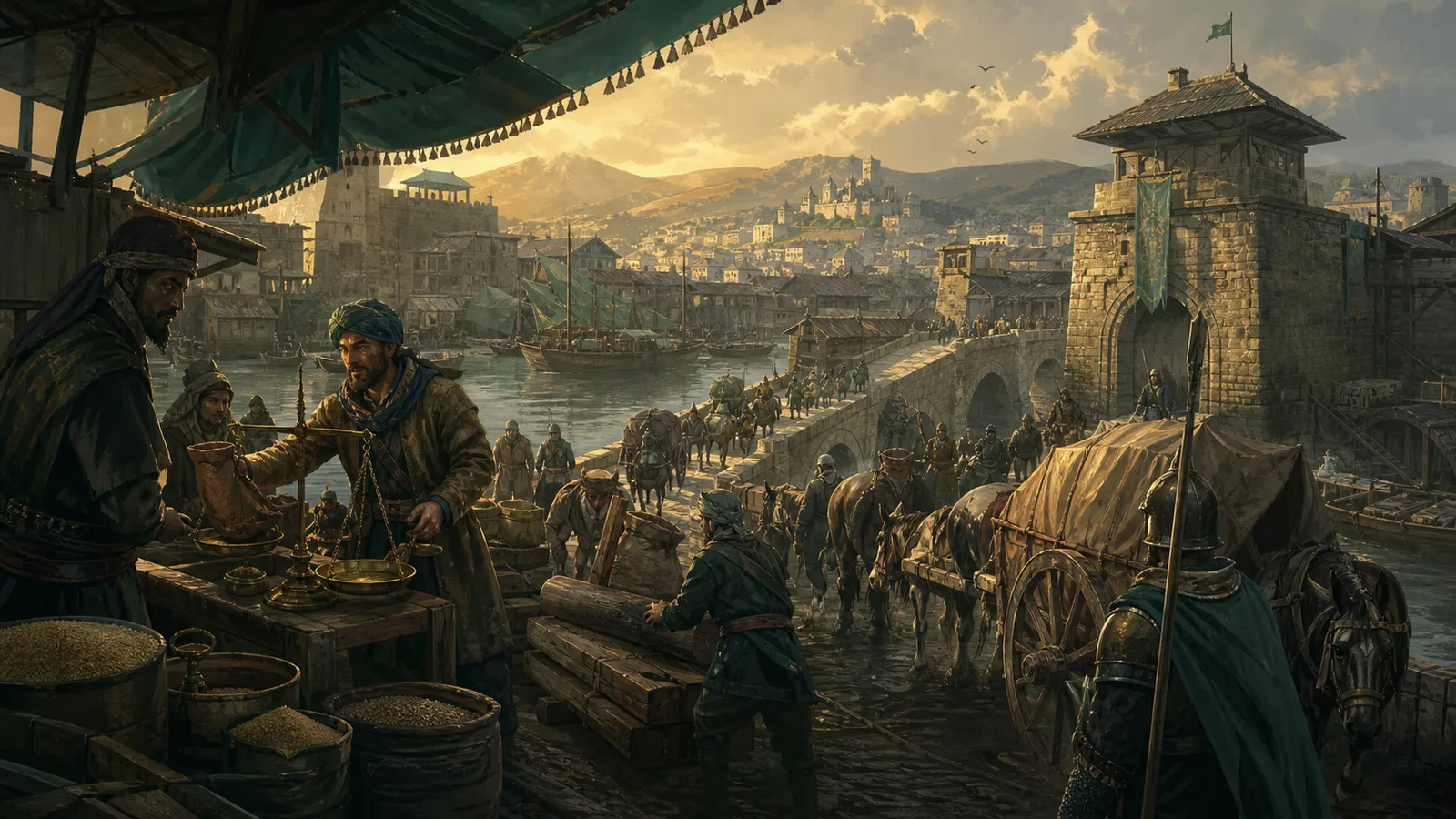
The world keeps moving
Every settlement, expedition, market shift, and regional power leaves a visible mark on the realm.
WHAT SURVIVED
A region known by use before it was known by borders
The oldest surviving descriptions do not define the Amber Vale as a kingdom or a province. They describe crossings, harvest grounds, ferry points, market clearings and roads leading somewhere else. Later records tried to draw harder borders around the region. None appear to have lasted.
Travel accounts repeatedly mention the same pattern: a settlement grows where two routes meet, prospers for a generation, and then disappears from later maps while the crossing itself remains.
Some chroniclers took this as evidence of war. Others blamed floods, exhausted ground or simple migration. The surviving fragments are too incomplete to settle the argument. What can be said is that the Vale seems to have outlived many of the names once imposed upon it.
Even now, old boundary stones can be found beside roads whose destinations are no longer recorded. Their markings differ from place to place. Several have been moved. At least according to one cartographer, some may never have marked borders at all.
A SURVEYOR'S ENTRY
Stone 17 was found where no border should have been.
One surviving field copy records a carved stone beside a shallow ford in the eastern Vale. The surveyor noted its symbol, measured its distance from the road and then added a second line in smaller script: the nearest village claimed the stone had been moved twice within living memory.
Field note: Marker lies south of the crossing, face turned toward the river. Villagers call it a border stone. No one agrees which border.
Later hand: Do not use for measurement. It stood uphill in my father's time.
The stone still appears in later copies as if its position were fixed. That is the problem with records of the Vale: certainty often arrived after the people who knew better were gone.
A CHRONICLER'S NOTE
The land is familiar. Its meaning is not.
The Amber Vale provides geography, routes and remnants to interpret, but no single surviving story owns them. A road can become a trade artery, a frontier or a forgotten path. A boundary stone can become law, superstition or rubble. The next meaning belongs to the civilizations that live beside them.
ROUTES
↗The Old Roads
Stone routes continue beyond the places that gave them their modern names.
Follow the roadsRECORDS
↗The Cartographers' Fragments
Incomplete maps preserve several incompatible versions of the Vale and its boundaries.
Read the fragmentsWORLD HISTORY
↗The World Chronicle
Old lore explains what came before. The Chronicle records what civilizations make of the world next.
Explore the ChronicleThe Vale remembers crossings better than kingdoms.
Continue into the roads, ruins and fragments that survived beyond the names once given to them.